Last updated: Thursday, 1 October 2026 (Ashoj 15, 2083). Roads in the east are still settling after the late-September rain, so check conditions before you leave.
For many families in eastern Nepal, Dashain is not complete without a visit to Pathibhara. The temple sits at 3,794 metres in Taplejung, near the Kanchenjunga region, and devotees climb to it to ask the goddess to fulfil their wishes. Last Dashain, more than 16,000 of them made the trip between Ghatasthapana and Kojagrat Purnima.
Getting there from Kathmandu is half the journey, and it is a long half. No bus goes to the temple door, and the cable car you may have read about is not running. Here is how the trip actually works in 2026: the bus route, the fare, the final walk, and the best days to go during Dashain.
Kathmandu to Pathibhara at a Glance
Road distance (Kathmandu to Taplejung) | About 670 km |
Bus travel time | Roughly 24 hours, longer in bad weather |
Typical fare | Around NPR 4,000 per seat |
Coach types | Hiace, seater, AC sofa and sleeper-style coaches |
Departure point | New Bus Park, Gongabu, plus a few other pickup points |
Temple altitude | 3,794 metres |
Last stretch | Jeep from Taplejung, then a 3 to 6 hour walk |
Guides online quote anything from 18 to 30 hours for the road journey, which tells you how much depends on the season and the state of the road. Current bus listings put it at about 24 hours, so plan for a full night and most of a day.
The Route Buses Take
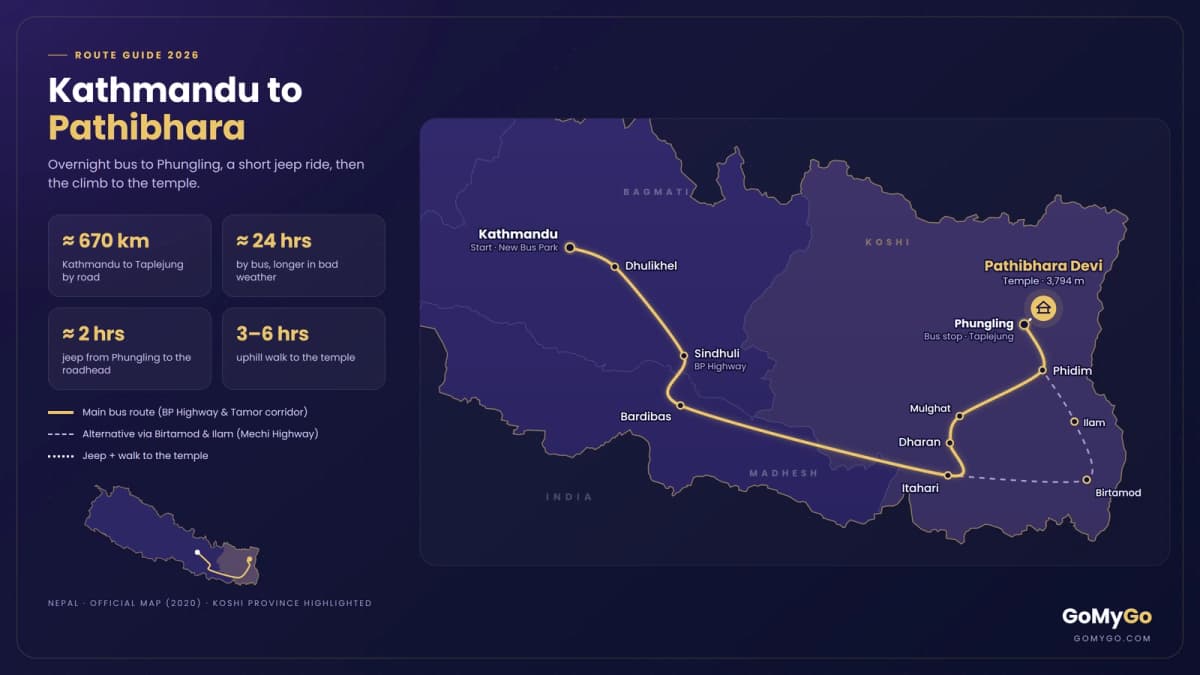
Buses heading east normally leave Kathmandu on the BP Highway through Dhulikhel, Khurkot and Sindhuli, join the Mahendra Highway at Bardibas, and run east towards Itahari or Birtamod. From there they turn north through Phidim along the Tamor corridor and climb to Phungling, the district headquarters of Taplejung. A newer option is the AC coach service that began running between Phungling and Kathmandu on this corridor in August 2026, aimed at pilgrims and Kanchenjunga-bound trekkers.
If 24 hours on one bus sounds like too much, split it. The Kathmandu to Jhapa route takes about 11 to 13 hours, and many pilgrims break the trip at Birtamod or Damak, sleep properly, and continue north the next morning. You can also change at Itahari or Dharan for the road to Phidim. On the way back, Ilam's tea gardens are an easy detour, and our Kathmandu to Ilam guide covers that stretch.
Travelling alone on an overnight route? Our guide to night bus safety for solo women has practical advice on seat choice and what to carry.
Ticket Price and Booking
GoMyGo's listings show the Kathmandu to Taplejung corridor at around NPR 4,000 per seat, depending on coach type and travel date. Shorter trips to Jhapa run roughly NPR 2,000 to 2,700. During Dashain, operators have been asked to charge the approved fares, and the government's festival rules push online booking wherever possible, so there is no reason to pay a premium at the roadside. Our Dashain 2083 advance bus booking guide explains the rules and the expected booking date.
Taplejung is a long, thinly served route compared with Pokhara or Chitwan, so don't leave it to the last day. Book your outward and return seats together, especially if you are travelling with elderly parents who need a particular seat.
Is the Pathibhara Cable Car Open?
No, and you cannot plan around it. The 2.7 km cable car was designed to run from Kaflepati to the temple. According to Nepal News's explainer on the cable car dispute, the Prime Minister ordered construction halted on 25 April 2026, citing concerns from the local Limbu community, who know the site as Mukkumlung, along with environmental and land questions. Construction officials said in June that about 60 percent of the work was done, and on 19 June the government formed a seven-member task force to resolve the dispute.
We could not find an official restart or opening date. For this Dashain, the way up is on foot.
From Taplejung to the Temple: The Last Stretch
Buses stop at Phungling. From there, a jeep takes around two hours to the roadhead. Guides name it Kaflepati or Sano Phedi depending on the source, and some trekkers start further back at Suketar. Ask your jeep driver in Phungling which roadhead is in use and how the trail is.
The walk itself is steep, mostly stone steps through forest, and takes roughly 3 to 6 hours depending on where you start and how fast you climb. There are basic lodges and tea stops along the way and rest houses near the temple, but nothing fancy. Many people set off before dawn to reach the shrine in the morning and be back down by afternoon.
Dashain at Pathibhara: When to Go
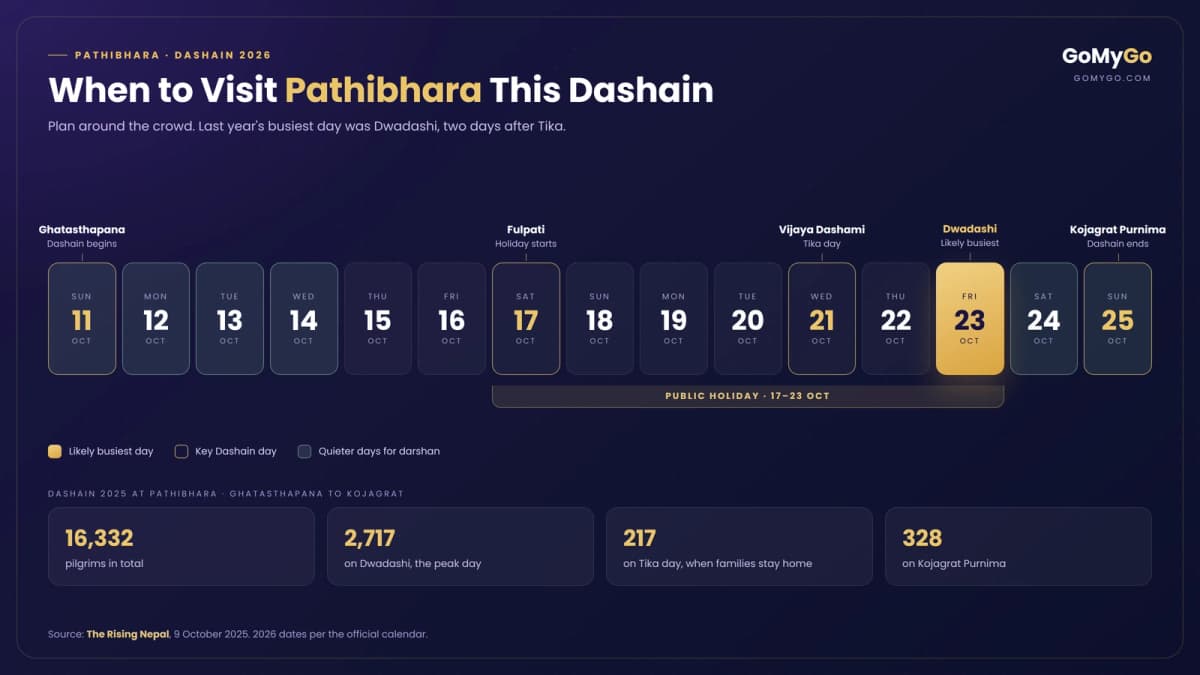
Dashain is the busiest season. According to The Rising Nepal's report on Dashain visitors, 16,332 pilgrims reached the temple between Ghatasthapana and Kojagrat Purnima last year. The peak day was Dwadashi, two days after Bijaya Dashami, with 2,717 devotees. Tika day itself saw only 217, because most families stay home. Heavy rain at the end of the festival caused floods and road blockages, and visitor numbers fell below what locals expected.
This year, Ghatasthapana is on 11 October, Bijaya Dashami on 21 October and Kojagrat Purnima on 25 October. If last year's pattern repeats, Dwadashi on Friday 23 October, the last day of the public holiday, will be the most crowded day. For a calmer darshan, aim for the first days after Ghatasthapana or the days around Kojagrat Purnima, when only a few hundred people came last year.
Autumn is also when the air is clearest, so you have a good chance of Himalayan views from the top. Heavy rain in late September disrupted several roads in the east, including the Tamor corridor near Phidim. The highways out of Kathmandu reopened on 29 September, but check our road status update and confirm with your operator before you leave.
What to Pack

- Warm layers and a windproof jacket. The temple area hovers around zero degrees and is windy even on clear days.
- Sturdy shoes with good grip. The stone steps are slippery in wet weather, and you will take your shoes off at the shrine anyway.
- Cash in small notes. Lodges and tea stops along the trail mostly deal in cash.
- A headlamp, water bottle and snacks for the pre-dawn start.
- Your ID. Buses now travel with passenger lists, so carry your citizenship card, licence or passport.
- Any regular medicines.
At 3,794 metres, walk slowly and drink plenty of water. If a headache, nausea or dizziness doesn't ease, don't push on to the summit. Turn back down.
Explore Nepal with GoMyGo
Pathibhara is one of eastern Nepal's most important pilgrimages, and the journey there is long enough that a confirmed seat matters. Comparing coach types, fares and departure times before you leave makes the overnight leg far less stressful.
You can search buses for the Kathmandu to Taplejung, Jhapa and Ilam corridors on the GoMyGo website, or install the app from the GoMyGo app download page and keep your e-ticket on your phone, even when the signal drops on the hills.
Payment is handled through fonePay and ConnectIPS for domestic users, PayPal for international travellers and Indian UPI for visitors from India. That matters for a pilgrimage that draws devotees from Sikkim and Darjeeling alongside Nepali families.
Every booking comes with instant confirmation by email and SMS, and 24/7 support is available on WhatsApp at +977 9704-666777 if your plans change along the way.
Final Words
Pathibhara rewards the effort. The bus ride is long, the climb is steep and the cable car is still a question mark, but the view from the top on a clear autumn morning makes most people forget the aching knees. Book early, travel in daylight where you can, pack warm and give the road a little extra time. Jai Pathibhara Mata.
Frequently Asked Questions
Written by
GoMyGo Team
The GoMyGo team covers Nepal travel, bus routes, booking tips, and everything you need for a smoother journey.