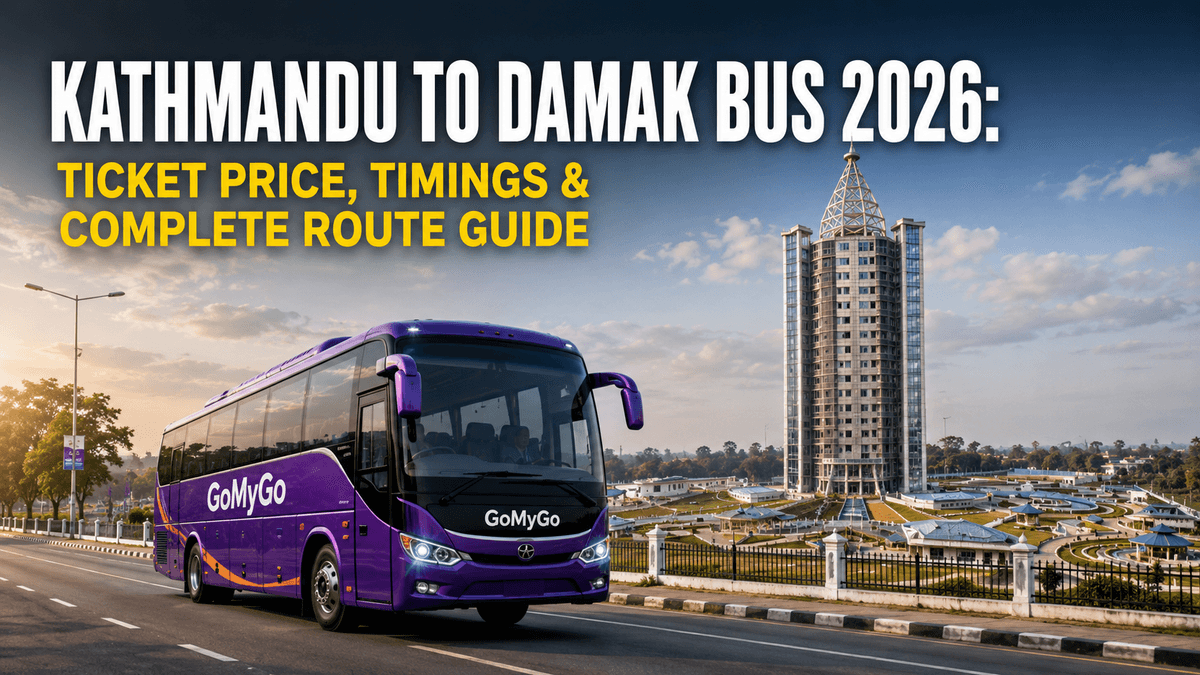
Kathmandu to Damak Bus 2026: Ticket Price, Timings & Complete Route Guide
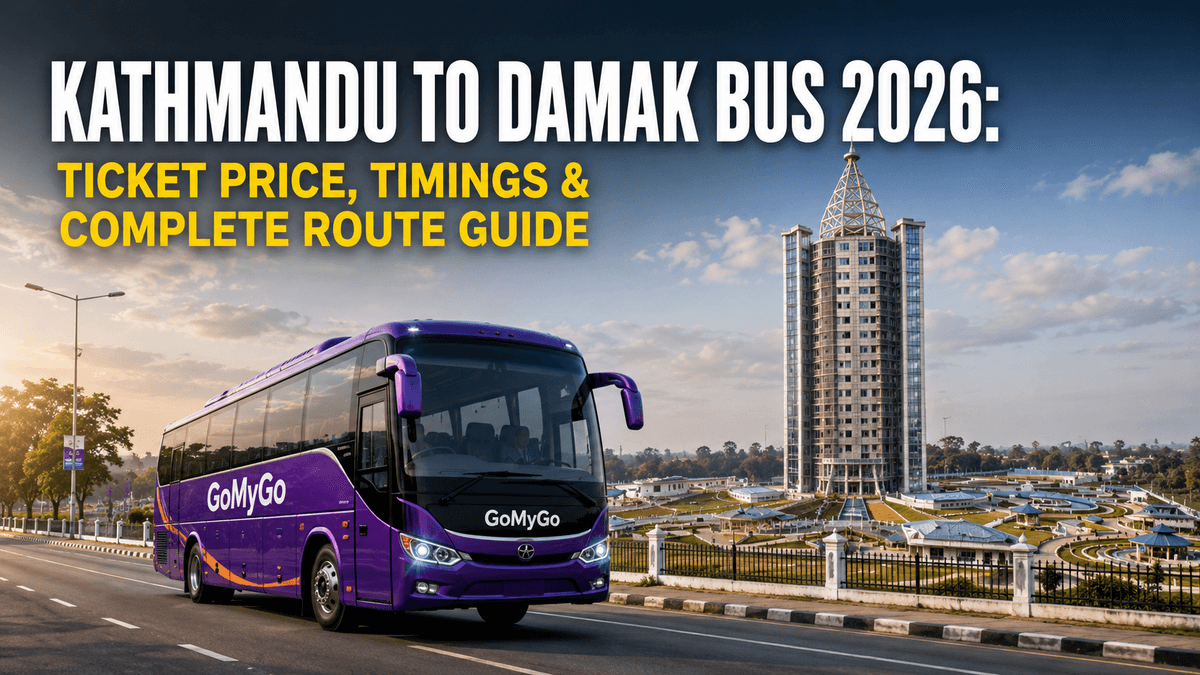
If you have ever stood at Gongabu on a warm afternoon watching sofa-sleeper coaches line up with "Jhapa" painted across the windscreen, you already know the feeling. The Kathmandu to Damak run is one of those journeys that Nepalis take for granted — students heading home for Dashain, traders moving between the capital and the eastern Terai, families visiting relatives in Jhapa, and the occasional traveller on their way to the tea hills of Ilam or the Kakarbhitta border.
It is a long ride. Nobody will pretend otherwise. But it is also one of the better-served routes in the country, with a genuine choice of coach types and a departure window wide enough that you can pick a bus around your own schedule rather than the other way around.
This guide covers what the ride actually costs in 2026, how long it really takes, where you board and get dropped, what the road looks like, and what is worth your time once you arrive in Damak.
Kathmandu to Damak at a glance
Road distance | Roughly 385–400 km via the BP Highway; closer to 500 km if the coach routes through Mugling and Narayanghat |
Typical journey time | 13–16 hours, occasionally longer in monsoon or festival traffic |
Fare range | Around Rs. 2,000 – Rs. 2,500 depending on coach type |
Departure pattern | Mostly afternoon, roughly 12:30 PM to 4:00 PM |
Arrival pattern | Early morning, roughly 5:30 AM to 8:30 AM |
Highway | Mahendra Highway (East–West Highway) for the final stretch |
Best months | October to April |
Kathmandu to Damak bus ticket price in 2026
Fares on this corridor currently sit between Rs. 2,000 and Rs. 2,500, and where you land in that range depends almost entirely on the coach you pick.
At the lower end, around Rs. 2,000 to Rs. 2,200, you are looking at standard sofa-seater and deluxe coaches. These are perfectly serviceable — reclining seats, two-by-two layout, a blanket and a water bottle on most services. The seats go back far enough to sleep in, though not flat.
Around Rs. 2,200 to Rs. 2,400 buys you an air-conditioned VIP sofa coach. This is where most regular travellers on this route end up. You get a deeper recline, better cushioning, usually WiFi and CCTV on board, and a noticeably quieter cabin because the windows stay shut.
At the top of the range, up to about Rs. 2,500, are the premium sofa-sleeper services. For a 14-hour overnight ride, a few hundred rupees for a flatter bed is one of the better-value upgrades in Nepali bus travel.
One thing worth knowing: you may see Damak listed at higher prices than this — sometimes well over Rs. 3,000. Those are almost always through-services that start in Kakarbhitta, Bhadrapur or Pasupatinagar and pass through Damak on the way. You are being quoted the price of a longer journey than the one you are taking. Filter for Damak-specific departures and the fare should fall back into the Rs. 2,000 to Rs. 2,500 band.
A note that catches people out every year: these are ordinary-season numbers. During Dashain, Tihar and Chhath, fares on eastern routes climb, and the cheap seats disappear first. If your travel dates fall inside a festival window, book early rather than hoping for a walk-up bargain. Our guide to booking buses during the Dashain rush goes into how far ahead you realistically need to plan.
How long does the Kathmandu to Damak bus actually take?
Timetables and reality diverge on this route, so here is the honest version.
Most operators schedule 14 to 18 hours, but a large share of those coaches originate in Kakarbhitta or Bhadrapur and count the full run. Damak sits roughly 90 km short of the border, which trims one and a half to two hours off. In practice, 13 to 16 hours is the realistic window for a Kathmandu to Damak overnight service.
What pushes it longer:
Monsoon (June to September). Landslide clearance on the BP Highway section and standing water on the Terai stretch both cost time. Add two to four hours to your mental estimate.
Festival weeks. The Kathmandu exit at Koteshwor and Bhaktapur can eat an hour on its own before the coach has properly started moving.
Roadworks. The East–West Highway is under upgrade in several sections, and single-lane diversions are common.
What makes it faster: leaving in the afternoon. Coaches that depart between 12:30 PM and 3:00 PM clear the valley before the evening crush and get the long Terai run done in the quiet hours after midnight. That is why almost nobody schedules a morning departure on this route.
Coach types on the Kathmandu to Damak route
Deluxe / sofa seater — Two-by-two seating, reclining, no air conditioning on the cheaper units. Fine in winter, less pleasant in May and June when the Terai heat arrives. Cheapest option.
AC sofa seater — The workhorse of this route. Sealed cabin, air conditioning, blanket, water bottle, often WiFi. The recline is generous without being flat.
VIP sofa sleeper (2×2) — Wider seats, deeper recline, more legroom. Usually the best comfort-to-price ratio on an overnight run.
Sleeper and cabin sleeper — Flat or near-flat berths. Fewer of these run to Damak specifically, and they are typically the through-services to Kakarbhitta. Priciest, and worth it if you genuinely cannot sleep sitting up.
One practical tip regardless of class: seats over the rear axle bounce hardest on the rough sections between Bardibas and Lahan. If the seat map lets you choose, take something in the middle third of the coach.
Boarding points in Kathmandu and dropping points in Damak
Coaches on this route depart from several points around the valley rather than one central terminal. The most common are:
New Bus Park (Gongabu) — the largest departure hub for eastern routes
Kalanki — convenient if you are coming from the Ring Road's western side
Koteshwor — useful for passengers in Bhaktapur and the eastern valley
Balaju and Bafal — used by a smaller number of services
Always confirm the exact boarding point on your ticket rather than assuming Gongabu. Coaches picking up at Koteshwor will not double back to Gongabu, and every festival season somebody misses a bus because of this.
In Damak, the standard drop is the Damak bus park on the Mahendra Highway, which is close to the town centre and well served by rickshaws and local taxis. Some through-coaches to Kakarbhitta will set you down at a highway stop rather than pulling into the bus park — worth asking the conductor before you settle in.
The route: what you actually pass
There are two ways east out of Kathmandu, and which one your coach takes changes the character of the ride.
Via the BP Highway. The shorter option. The road climbs out through Dhulikhel, drops into the Sindhuli hills alongside the Roshi and Sunkoshi rivers, and meets the Mahendra Highway at Bardibas. It is genuinely scenic in daylight, though most of it happens after dark on this route. It is also the more weather-sensitive of the two, with a history of monsoon damage around Nepalthok and Mangaltar.
Via Mugling and Narayanghat. The longer, flatter alternative — down the Prithvi Highway to Mugling, along the Trishuli to Narayanghat, then across through Hetauda and Pathlaiya to join the East–West Highway. Adds roughly 100 km and a couple of hours, but the road surface is more consistent.
Either way, the second half of the journey is the same: the long, straight eastward run on the Mahendra Highway through Lahan, Mirchaiya and Kadmaha, across the Koshi Barrage between Bhardaha and Bhantabari, then through Itahari, Urlabari and finally Damak.
That Koshi crossing is worth staying awake for if the timing works out. It is one of the most striking pieces of infrastructure on the whole highway, and the wetlands on either side are part of Koshi Tappu Wildlife Reserve, Nepal's most important birding site. In an eastbound overnight coach you will usually cross it somewhere around dawn.
Best time to travel
October to April is the comfortable window. The Terai is mild, the sky is clear, and the tea gardens around Jhapa are at their most photogenic in the cooler months.
May and June bring serious heat to the eastern plains — non-AC coaches are hard work in this period. July to September is monsoon: expect delays, and check road conditions before committing to tight onward plans.
The festival months are their own category. Dashain and Tihar fill every eastbound seat in the country, and Chhath adds a second wave of demand on Terai routes specifically.
Practical tips for the overnight ride
Carry a light jacket even in summer. AC coaches run cold at 2 AM regardless of what the Terai is doing outside.
Keep cash in small notes. Highway dinner stops around Bardibas and Lahan rarely take digital payment reliably.
Charge everything before boarding. Charging points exist on most AC coaches but are not guaranteed to work.
Eat light before departure. The road through Sindhuli is winding, and a heavy meal plus hairpin bends is a poor combination.
Screenshot your ticket. Mobile data on the Sindhuli stretch is patchy, and you do not want to be hunting for a confirmation email at boarding time.
Motion sickness tablets if you are prone — take one before departure, not once you already feel unwell.
What to do once you reach Damak
Damak is not a tourist town in the conventional sense, and that is part of its appeal. It is one of Nepal's oldest municipalities, established in 1982, sitting between the Ratuwa River to the east and the Mawa to the west with the Shivalik hills rising to the north. The Mahendra Highway runs straight through the middle of it.
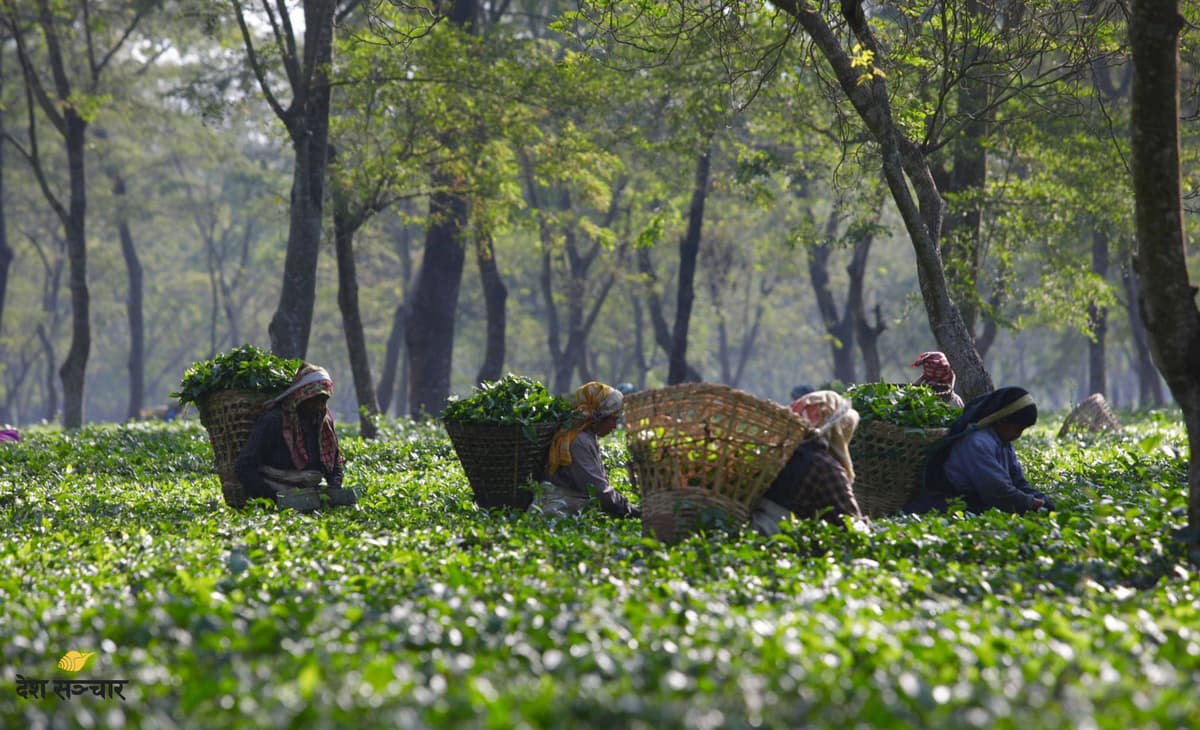
Tea gardens. Damak has its own estate, historically linked to the former royal family, and the wider Jhapa tea belt begins here. It is flatland tea rather than the hill terraces of Ilam, but the sightlines across the bushes at first light are worth the early start.
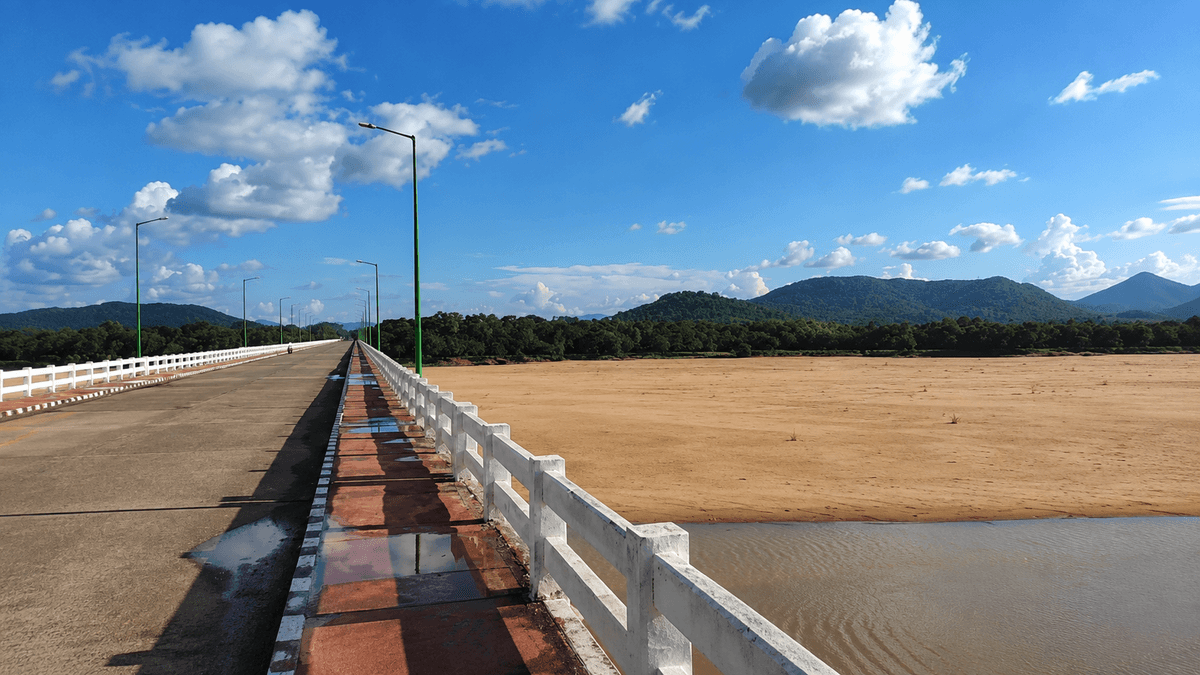
Ratuwa River. The riverbanks on the town's edge are where locals go in the evening. Simple, and pleasant.
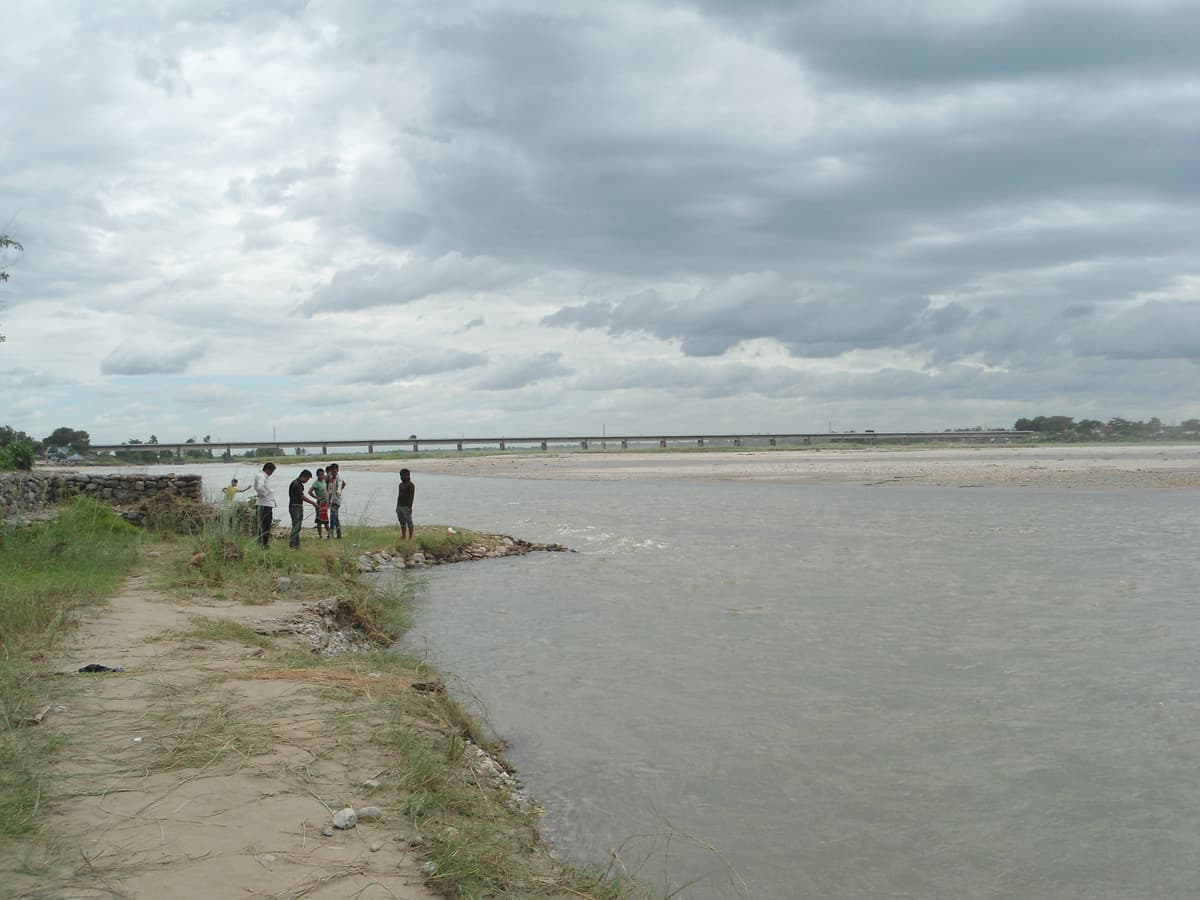
Kankai River, about half an hour away, is a popular local outing spot and holds religious significance for the communities along it.
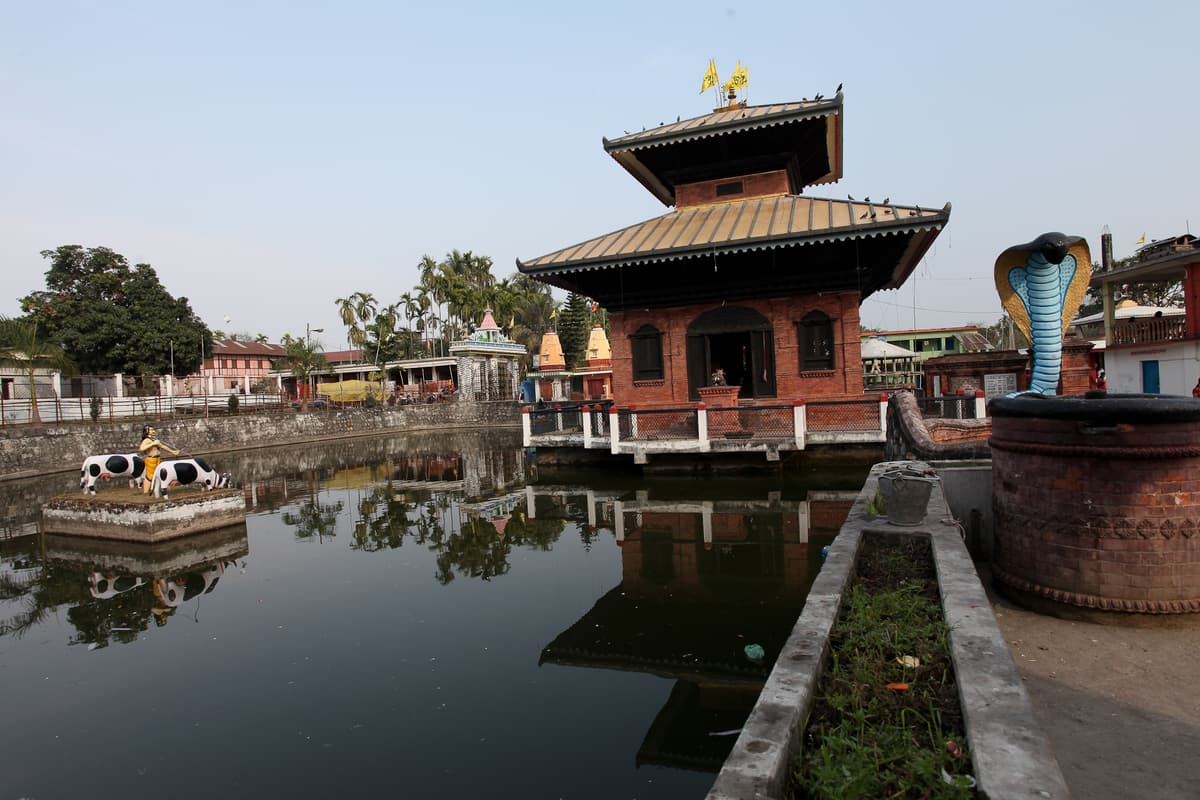
Charali and Arjundhara, both a short hop east toward Birtamod, are the two temple visits most people in Jhapa will recommend — Pau Pathivara at Charali and the pagoda-style Arjundhara temple, sometimes called the Pashupatinath of the east.
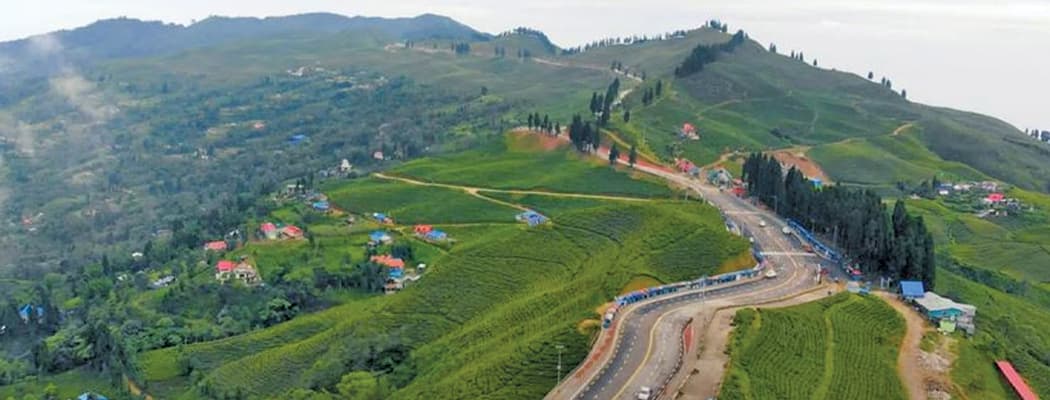
Onward to Ilam. Damak is a reasonable staging point for the tea hills. If Kanyam and the Ilam tea gardens are your actual destination, our Kathmandu to Ilam route guide covers that leg in detail.
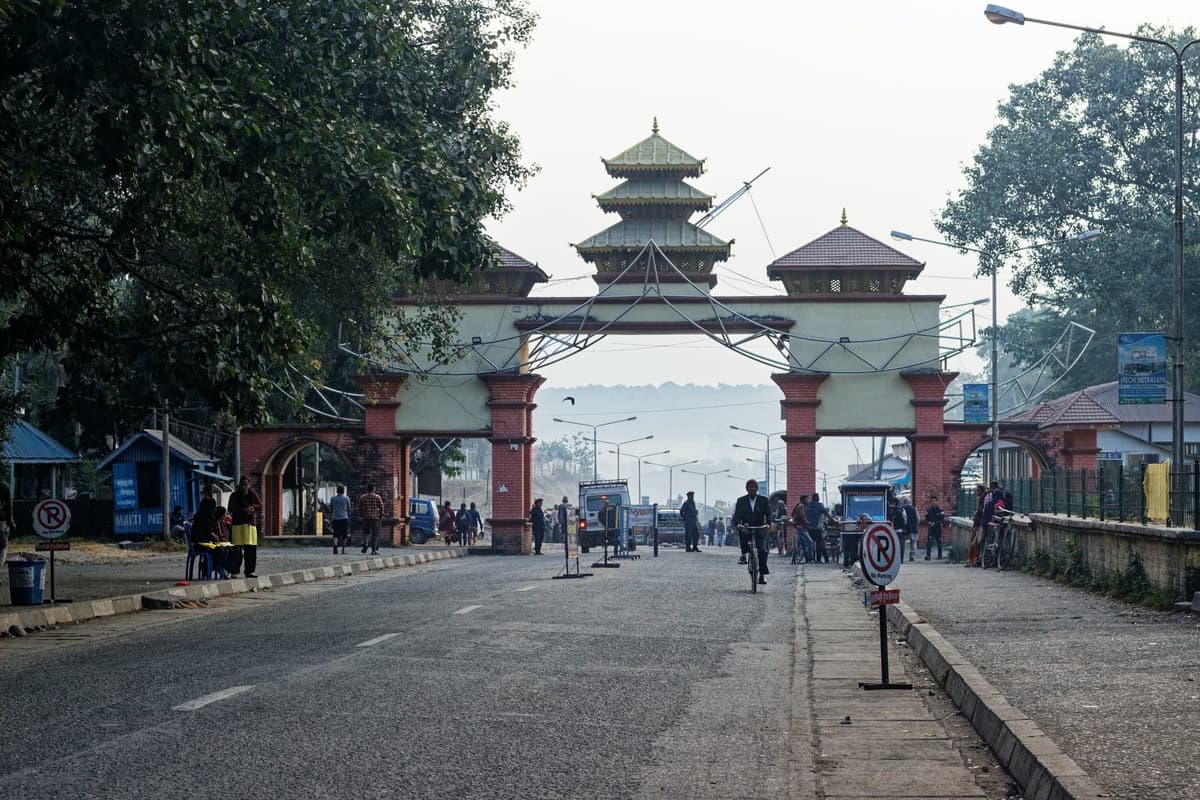
Onward to the border. Kakarbhitta is roughly 90 km east — an hour and a half to two hours by local bus or jeep — for travellers continuing into India via the Mechi bridge.
Explore Nepal with GoMyGo
The Kathmandu to Damak corridor is one of those routes where booking ahead genuinely changes your experience. The good seats — the middle-of-coach VIP sofa berths on the well-maintained vehicles — go first, and they go early. Turning up at Gongabu on the afternoon of travel usually means taking whatever is left.
Booking online removes most of that friction. GoMyGo lists live availability for this route across both the App, available on Android and iOS, and the website, so you can compare coach types, departure times and boarding points side by side instead of walking between counters. The seat map is live, which means what you see is what is actually free.
Payment works through the methods people already use — eSewa, Khalti, IME Pay, ConnectIPS, and major debit and credit cards. For travellers booking from outside Nepal, Indian UPI and PayPal are also supported.
Confirmation arrives by email and SMS the moment payment clears, so there is no counter slip to lose. If something changes — a delayed departure, a boarding point query, a cancellation — support is reachable around the clock on WhatsApp at +977-9704666777.
Final Words
The Kathmandu to Damak bus is a long night, but it is a well-run one. Fares are reasonable for the distance, the coach options are genuinely varied, and the afternoon departure pattern means you lose a night rather than a working day.
Book a few days ahead, pick a middle seat on an AC sofa coach, carry a jacket, and try to be awake for the Koshi crossing at dawn. Damak will be waiting on the other side of it — quieter than you expect, greener than you expect, and a good deal more interesting than a highway town has any obligation to be.
Frequently Asked Questions
Written by
GoMyGo Team
The GoMyGo team covers Nepal travel, bus routes, booking tips, and everything you need for a smoother journey.