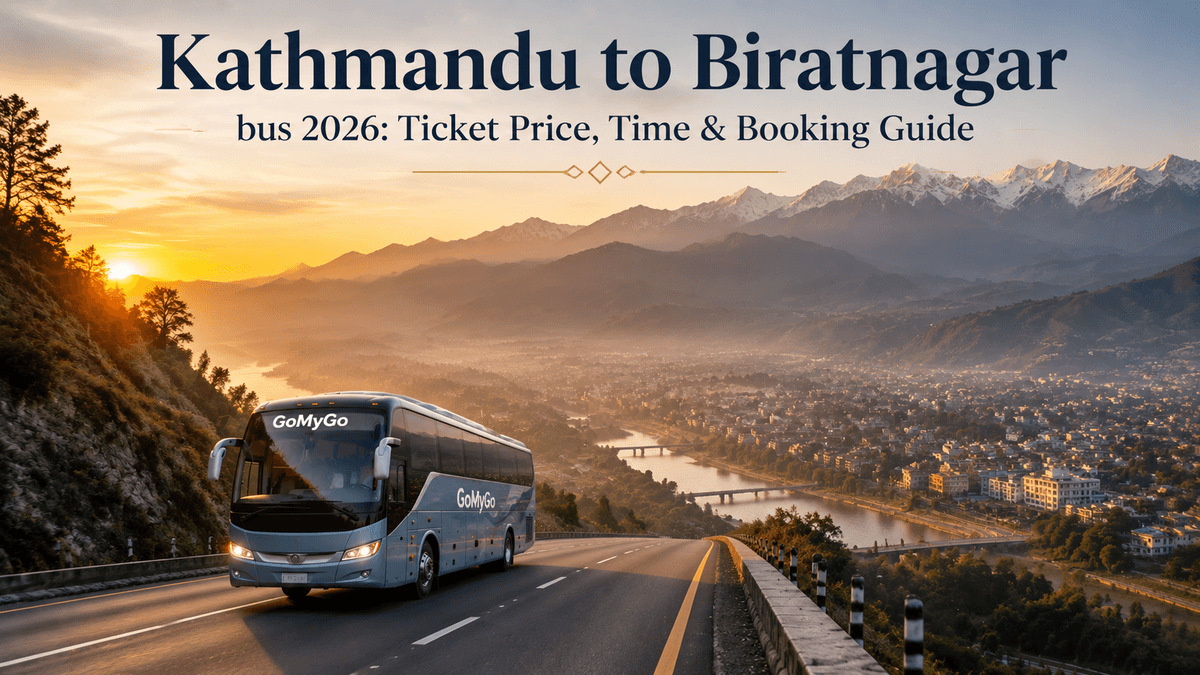
Kathmandu to Biratnagar Bus 2026: Price, Time & Booking Guide
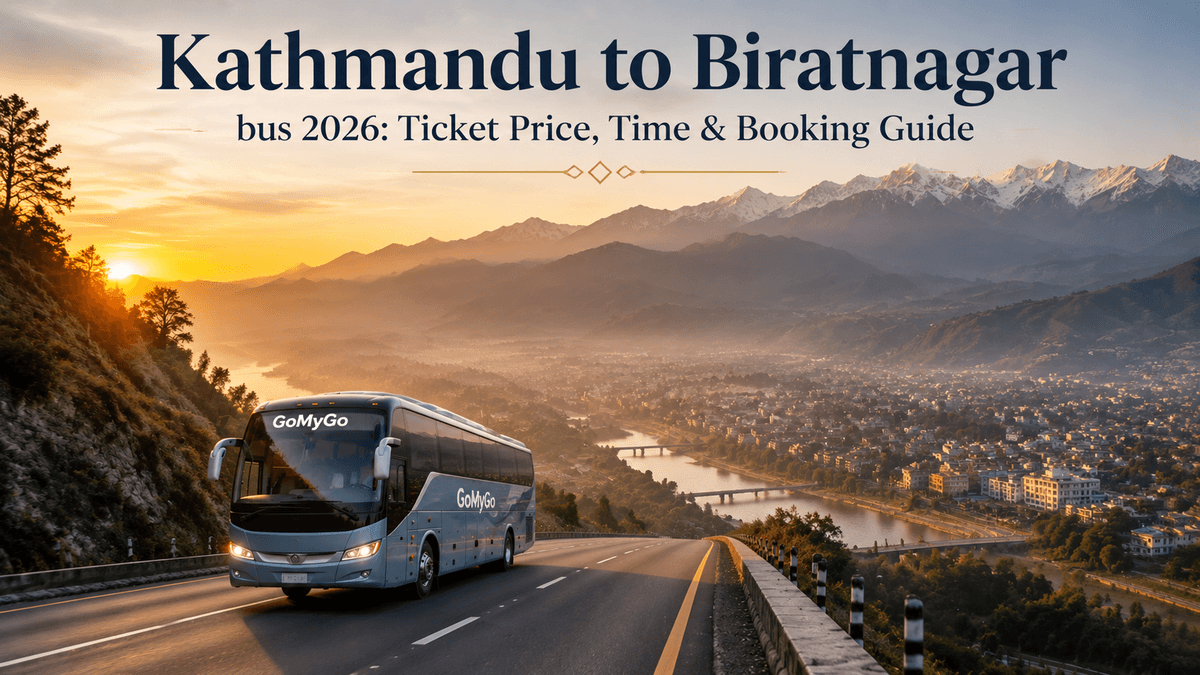
The Kathmandu to Biratnagar bus covers around 500 km in 10 to 13 hours, with fares ranging from roughly NPR 1,600 to 2,600 depending on the bus type. Most travellers take an overnight sleeper or VIP coach, leaving Kathmandu in the evening and reaching Biratnagar by morning. You can compare buses and book your seat online through GoMyGo.
Biratnagar is one of those journeys a lot of people do without thinking of it as a journey at all — it's just the road home, or the road to work, or the road to family. As the largest city in Koshi Province and the headquarters of Morang district, Biratnagar pulls in students, workers, and traders from across eastern Nepal, which means this route runs busy almost year-round. This guide walks you through everything worth knowing before you board.
This guide is reviewed and kept up to date by the GoMyGo travel team. Fares and timings vary by operator and season — always check live prices before booking.
Route Overview at a Glance
Detail | Info |
|---|---|
Route | Kathmandu → Biratnagar |
Distance | ~500 km |
Travel Time | 10–13 hours |
Road Type | Prithvi & Mahendra Highway, mostly Terai plains |
Arrival Point | Biratnagar Bus Park |
Buses Per Day | 20+ departures, night only |
How long does the Kathmandu to Biratnagar bus take?
The journey takes 10 to 13 hours on average. Night buses and premium VIP coaches tend to be at the faster end because they make fewer stops, while daytime buses and those calling at more towns along the way can run longer, especially if there's traffic on the Mugling–Narayanghat stretch.
The route leaves the Kathmandu valley and climbs down to Mugling, follows the highway through Narayanghat into the Terai, then runs east along the Mahendra Highway through Pathlaiya, Lahan, and Itahari before turning south to Biratnagar. The first couple of hours out of the valley are the windiest; after that, it flattens out into long, straight plains driving.
Where does the bus leave from in Kathmandu?
Most Biratnagar buses depart from New Bus Park, Gongabu, the main long-distance hub. But the route is well served by other pickup points across the valley, so you may not need to go all the way to Gongabu:
Gongabu (New Bus Park) — primary departure, widest choice of buses
Koteshwor — convenient for the eastern side of the valley
Kalanki — pickup for the western side
Jorpati / Bouddha / Tinkune — many night buses pick up along this stretch on their way out
Buses typically run from early morning (around 4 AM) right through to the evening, with the heaviest cluster of departures in the late afternoon and evening for overnight travel. Confirm your exact pickup point and time when booking — the departure from your stop may be later than the Gongabu start time.
Which bus should you take?
There are four main types of buses on the Kathmandu–Biratnagar route, and the right one depends mostly on whether you're travelling by day or overnight.
Hiace / EV Hiace
The quickest option, running during the day with 2–3 passengers per row. Good if you want to move fast and don't mind a firmer seat. Best for shorter daytime travel rather than the full overnight haul.
VIP Sofa Seater AC (2×1 and 2×2)
Full-size air-conditioned coaches with reclining seats, available day and night. The 2×1 layout gives you a solo seat with more room; the 2×2 is the standard comfortable option. A solid middle choice for most travellers.
Single Sleeper AC
The overnight favourite. Air suspension, near-flat berths, and a curtain for privacy. You sleep through the plains driving and arrive in Biratnagar reasonably fresh. Worth booking ahead, as these go first.
Double Sleeper AC
Wider berths built for two, ideal for couples or a parent travelling with a child. The most comfortable way to do the route, at a small premium over the single sleeper.
If you're travelling overnight — and most people on this route do — the Single Sleeper is the sweet spot for comfort and price. Save the Hiace for daytime trips when you'd rather move quickly and watch the Terai roll by.
Kathmandu to Biratnagar Bus Ticket Price (2026)
Fares range from about NPR 1,700 to 2,600, depending on the bus type, operator, and season. Here's a rough guide:
Bus Type | Approx. Fare (NPR) | Best For |
|---|---|---|
Hiace / EV Hiace | 1600 – 2200 | Fast daytime travel |
VIP Sofa Seater 2×2 | 2000 – 2400 | Standard comfort, only night service |
VIP Sofa Seater 2×1 | 2,000 – 2600 | More personal space |
Single Sleeper AC | 2000 – 2400 | Overnight comfort |
Double Sleeper AC | 4000 – 4800 | Couples and families |
These are indicative ranges — actual prices shift with demand, and rise noticeably during festivals like Dashain and Tihar. Booking early is the best way to lock in a lower fare and the seat you want.
What's on board
The better operators on this route run well-equipped coaches. On a good VIP or sleeper bus, you can typically expect:
Onboard washroom (on most sleeper and premium coaches)
WiFi (works on the highway, patchy in remote stretches)
Air conditioning and heater
Charging ports at your seat
Recliner or sleeper berth depending on bus type
Water bottle and light snacks
LED TV and music system
Professional driver and staff
Bring your own headphones if the on-board playlist isn't your thing, and keep a light layer handy — the AC gets cold around midnight, particularly in the winter months.
Tips for the journey
Book ahead for weekends and festivals. Biratnagar is a "going home" route for a huge population, so weekends, public holidays, and especially Dashain and Tihar see seats vanish fast. Book early for these.
Take motion sickness medication before leaving Kathmandu. The winding section is in the first couple of hours, down toward Mugling. Sort yourself before you hit the bends.
Carry some cash for meal stops. Buses make one or two daal bhaat halts on the highway, and most roadside dhabas don't take digital payment.
Dress in layers. The AC can run cold overnight even when the Biratnagar plains are warm — and Biratnagar is one of Nepal's hottest cities, so you'll feel the temperature jump when you step off.
Reach your pickup point early. Valley traffic near the bus parks can be slow, especially in the evening rush when most night buses leave.
The journey itself
The first stretch out of Kathmandu is all hills — the descent toward Mugling, then the run alongside the Trishuli river toward Narayanghat. Once you're past Narayanghat, the land opens into the Terai and the highway straightens out. This is the long, quiet middle of the journey: flat fields, small highway towns, the occasional river bridge.
If you're on a night bus, you'll likely sleep through the plains and wake somewhere near Itahari as the bus turns south for the final run into Biratnagar. By the time you arrive, the morning is usually warming up fast — Biratnagar sits low and hot in the far east, and the air feels different the moment you step down. Tea shops are open, rickshaws are out, and the city is already moving.
Explore Nepal with GoMyGo
GoMyGo helps travelers compare buses, check seat availability, and book tickets online for destinations across Nepal and selected Nepal–India routes. You can plan your next trips efficiently and conveniently.
If you are interested in other popular routes, you can explore these guides:
For more travel inspiration and official information about Nepal, you can also check the Nepal Tourism Board website.
Frequently Asked Questions
Written by
GoMyGo Team
The GoMyGo team covers Nepal travel, bus routes, booking tips, and everything you need for a smoother journey.